
AI-Native Web Design
Your website should load fast, feel effortless to use, and convert cleanly on any device. We build AI-native websites focused on UX validation, performance engineering, and measurable speed improvements. This page is about build quality and user experience — not marketing strategy, not ranking promises, and not brand identity work.

Performance-first builds designed to reduce lag and improve real user experience.
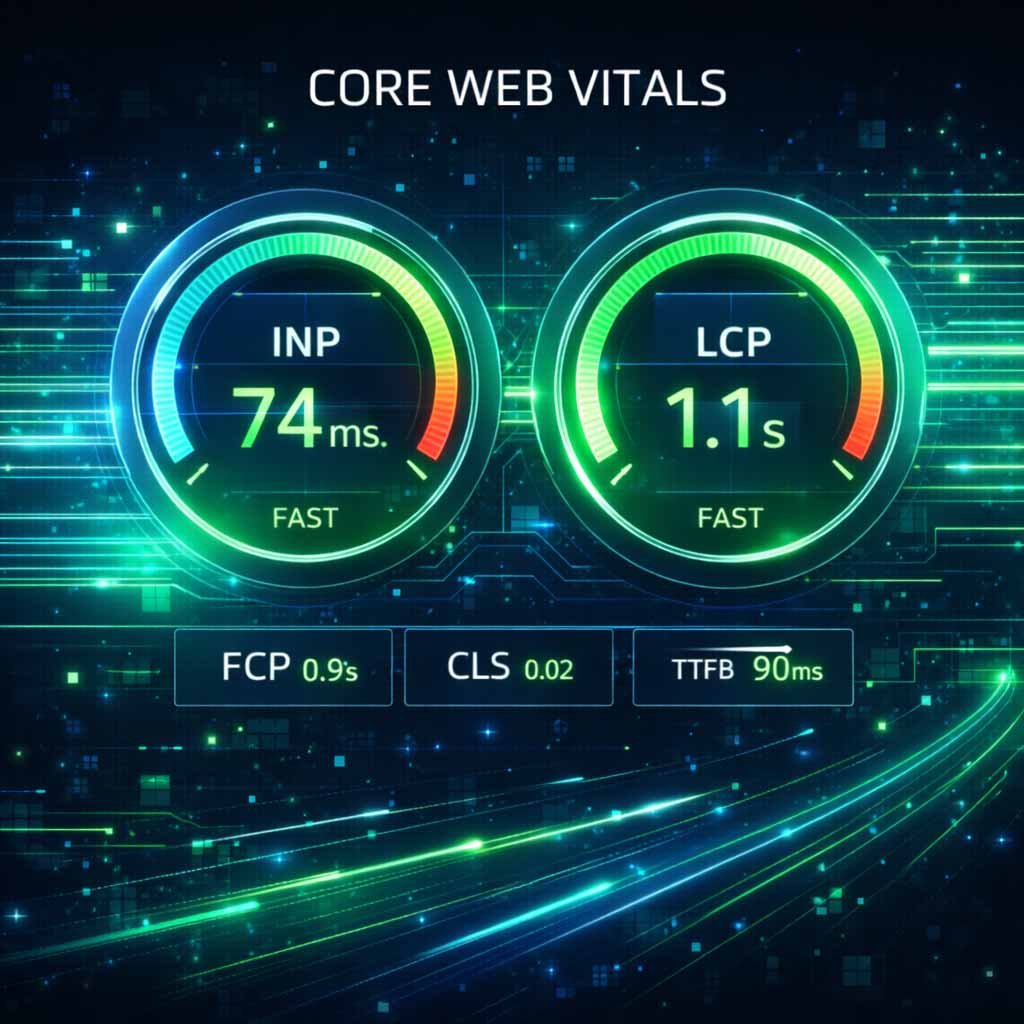
Targets for INP and LCP so your site feels responsive and stable.

Clear page layout and friction removal so users can take action faster.
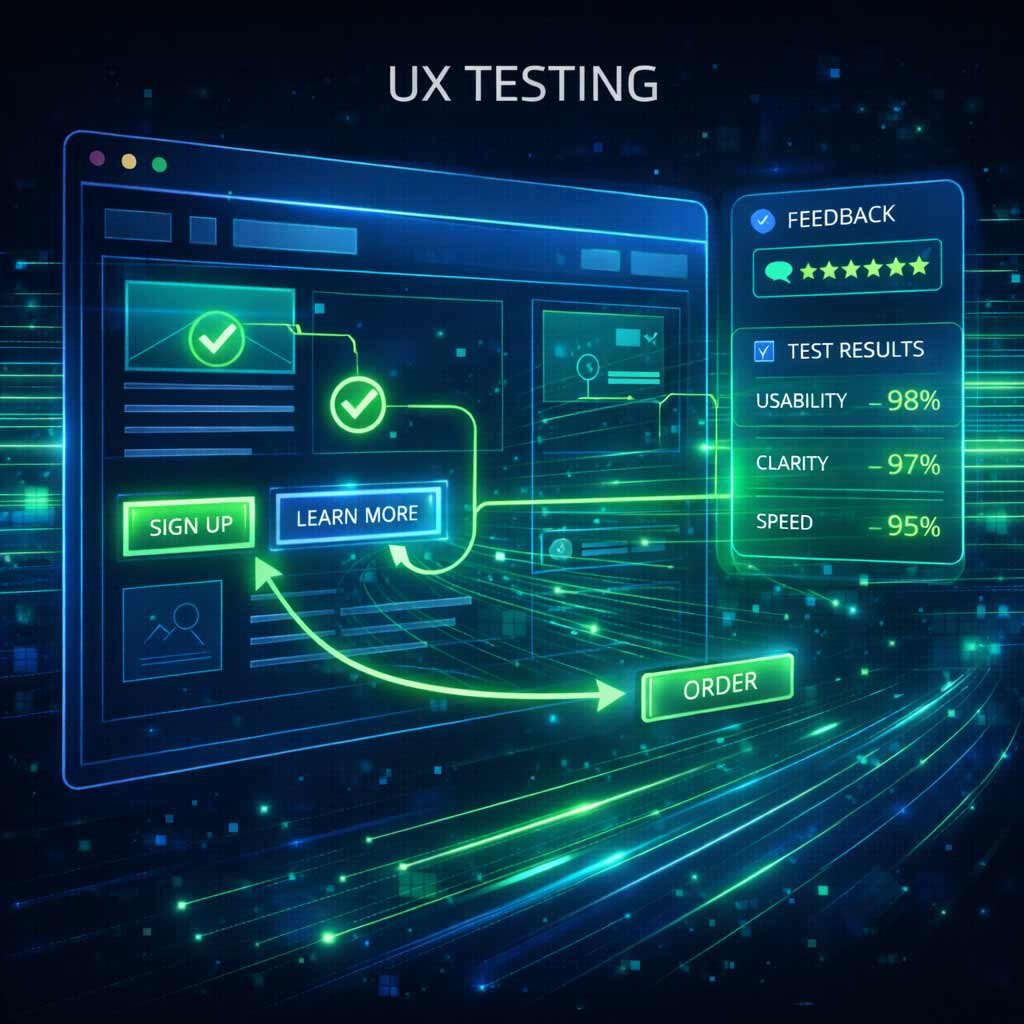
Usability checks that validate the experience before and after release.
Core Web Vitals Targets (INP / LCP)
Performance should be measurable. We build with Core Web Vitals targets that support a faster, smoother experience. Targets below are practical design-and-build thresholds used as engineering goals.
What We Optimise For
A fast site is not “one trick.” It’s the result of disciplined build choices: layout stability, controlled scripts, optimised media, and interaction responsiveness.
- LCP (Largest Contentful Paint): how quickly the main content becomes visible
- INP (Interaction to Next Paint): how responsive the site feels when users interact
- CLS (Cumulative Layout Shift): visual stability during load
- TTFB: server response time baseline for speed consistency
- Mobile-first behaviour: performance on real devices, not only desktop tests
We validate improvements with repeatable testing and a change log so performance doesn’t regress over time.
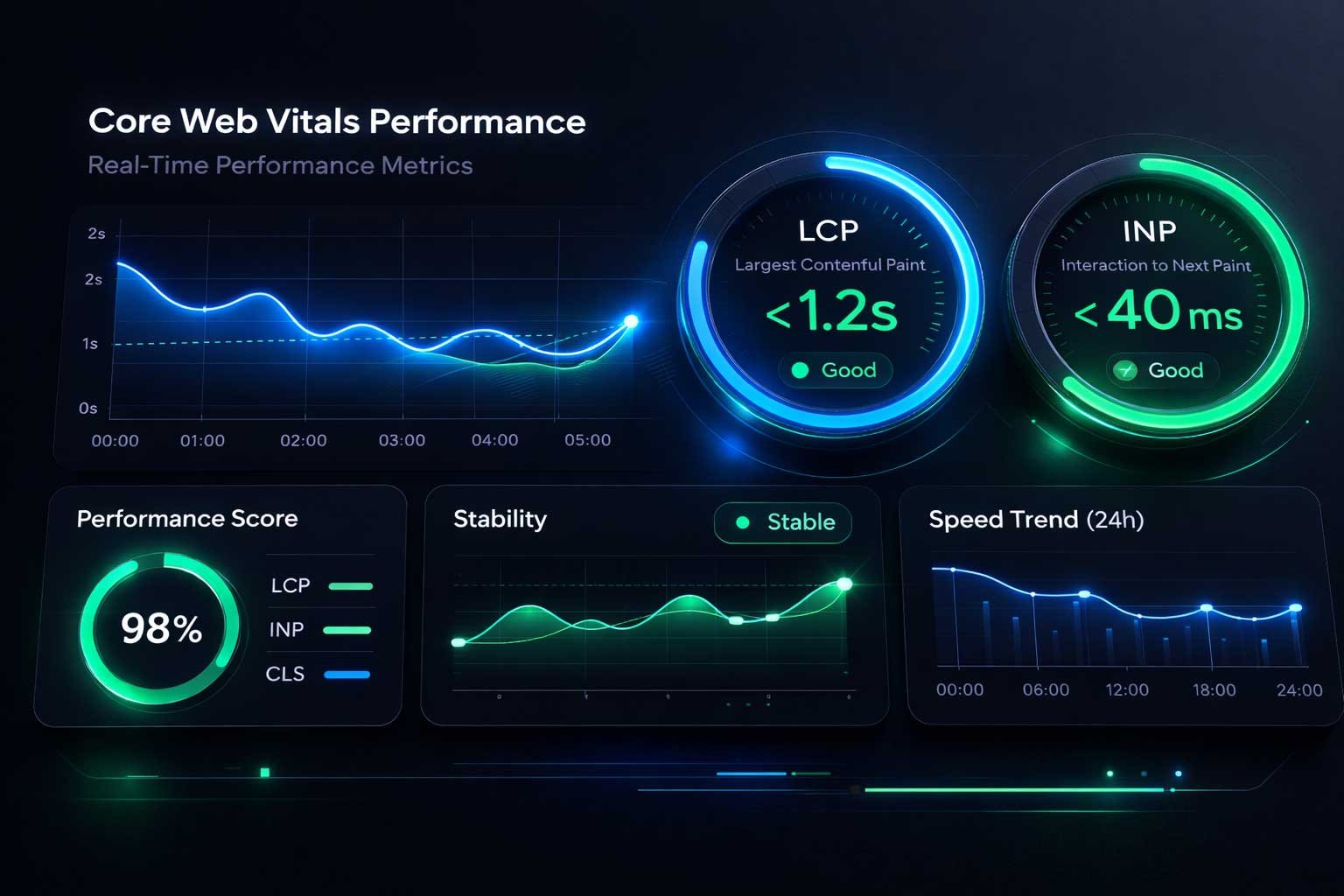
Target: LCP
≤ 2.5s
Main content appears quickly. A core signal for perceived speed.Target: FID
≤ 100ms
Measures responsiveness. How fast the page reacts to input.Target: CLS
≤ 0.1
Visual stability. Prevents content from jumping around.What AI-Native Web Design Includes
A build service focused on performance, usability, and a clean user journey. No branding packages, no marketing strategy paragraphs, and no ranking promises.
Performance-First Layout
Layout designed to render quickly and remain stable across devices.
- Lightweight page structure
- Optimised media handling
- Controlled third-party scripts
Conversion-Focused Pages
Pages that reduce friction and make actions obvious: call, form, booking, enquiry.
- Clear page hierarchy
- Accessible CTAs
- Form friction reduction
Mobile UX Validation
Mobile-first testing to ensure the experience remains smooth on real devices.
- Tap targets and spacing
- Navigation clarity
- Interaction responsiveness
Release QA And Monitoring
Launch with checks that prevent regressions and protect performance.
- Pre-release QA checklist
- Speed testing baseline
- Change log and monitoring
Want A Faster Website Experience?
Start with a speed audit and a practical performance roadmap.
Speed Test Score (Demo)
Performance should be visible and measurable. This demo widget shows how we present speed outcomes. Replace demo values with your real test results once your site URL is assessed.
Speed Score Overview
We use repeatable testing to baseline your site, apply performance fixes, then re-test to validate improvements. Scores are only meaningful when combined with CWV metrics (LCP/INP/CLS).
Largest content visible
Interaction response
Layout stability
Demo-only view. Live metrics should be measured against your real pages and device profiles.
Interpretation
—
Practical readoutNext Fix
—
Highest leverageLCP
—
INP
—
Get A Speed Roadmap
We’ll benchmark your pages and provide a prioritised fix plan.
How We Deliver AI-Native Web Design
A practical workflow designed to reduce risk, validate usability, and protect performance.
1. Baseline + Plan
- Speed benchmark and CWV baseline
- UX friction and page clarity review
- Prioritised build plan
2. Build + Optimise
- Performance-first layout and media optimisation
- Mobile-first interaction refinement
- Conversion path simplification
3. Validate + Release
- Re-test CWV and speed scores
- QA checklist and regression prevention
- Monitoring and change log
Explore Related Services
Website performance works best when your wider service stack is aligned. Explore our core services and proof below.
Website Design FAQs
Answers to Common Website Design Questions
Ready For A Faster Website?
Start with a speed benchmark and a fix roadmap.